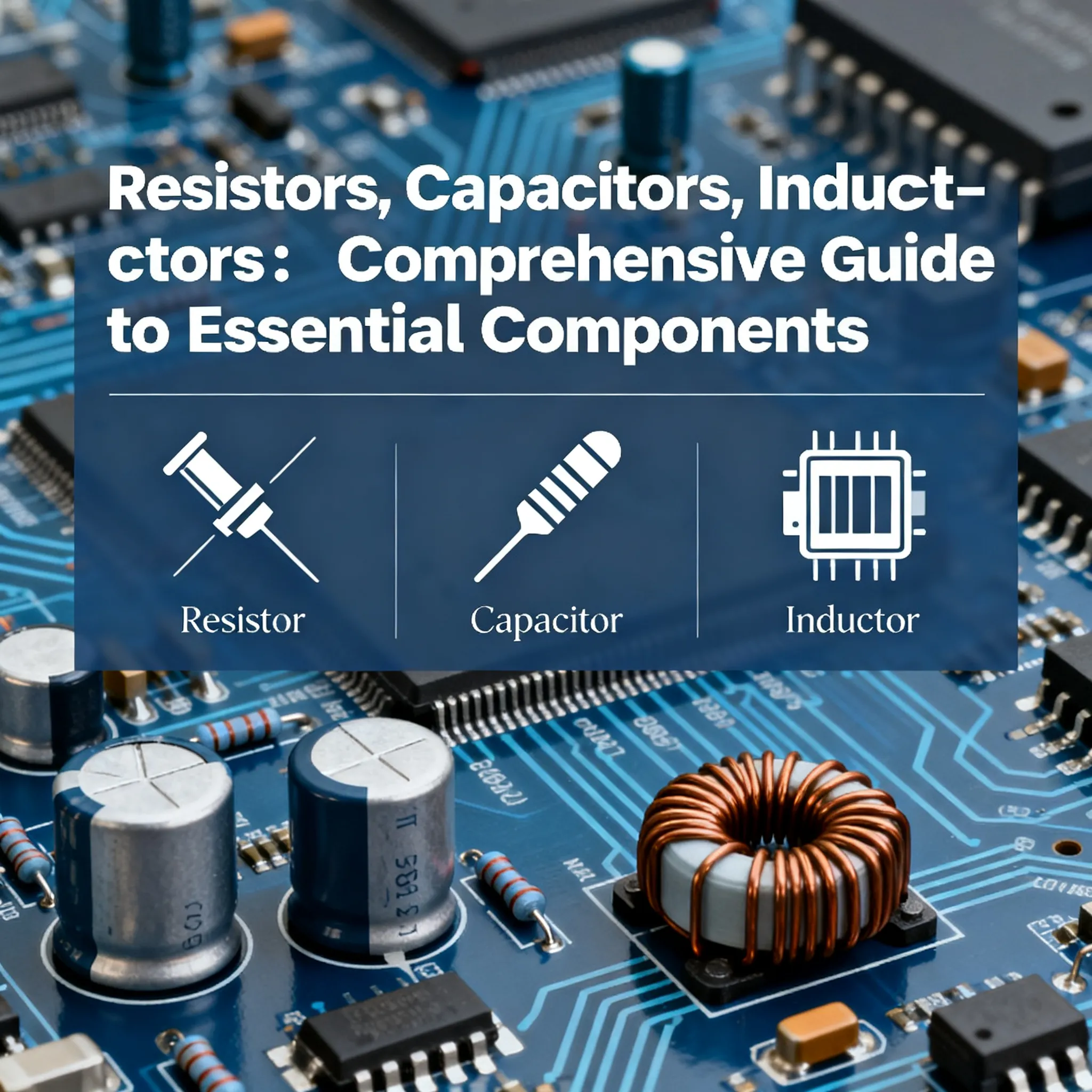
5.2 Passive Components: Complete Guide to Performance and Applications
Comprehensive guide to 5.2: passive components. Technical analysis, sourcing strategies, and expert recommendations for electronics professionals.
5.2 Passive Components: Complete Guide to Performance and Applications
Passive components play a crucial role in electronic circuits, serving various functions without the need for external power sources. This comprehensive guide delves into the specifications, applications, and sourcing tips for passive components, including resistors, capacitors, and inductors. Understanding these elements ensures better design and integration into circuits.
What Are Passive Components?
Passive components are electronic components that do not require a source of energy to operate. Unlike active components, which can amplify signals or control current, passive components rely on the passive properties of electrical materials. Common types include:
- Resistors
- Capacitors
- Inductors
- Transformers
- Filters
Specifications of Passive Components
Resistors
Resistors limit the flow of electric current in a circuit. Key specifications include:
- Resistance Value: Measured in ohms (Ω), this is the opposition to current flow.
- Tolerance: Indicates how much the actual resistance can vary from the specified value.
- Power Rating: Measured in watts (W), it indicates how much power a resistor can dissipate without failing.
- Temperature Coefficient: This defines how resistance changes with temperature.
Capacitors
Capacitors store and release electrical energy. Important specifications include:
- Capacitance Value: Measured in farads (F), it indicates how much charge a capacitor can store.
- Voltage Rating: The maximum voltage a capacitor can handle before breaking down.
- Tolerance: The variation in capacitance from the stated value.
- ESR (Equivalent Series Resistance): A measure of resistance within the capacitor that affects performance and efficiency.
Inductors
Inductors store energy in a magnetic field when electrical current passes through them. Their specifications include:
- Inductance Value: Measured in henries (H), it indicates the ability to store magnetic energy.
- Current Rating: The maximum current an inductor can handle without saturation.
- Resistance: The DC resistance associated with the inductor that can impact efficiency.
- Quality Factor (Q): A measure of the inductor's performance at a given frequency.
Applications of Passive Components
Passive components are integral to numerous applications across different fields, including consumer electronics, telecommunications, automotive, and industrial automation. Below are some key applications:
Resistors
- Voltage Division: Used in voltage divider circuits to obtain a desired output voltage.
- Current Limiting: Protects sensitive components from excessive current.
- Filter Circuits: Works in conjunction with capacitors to create low-pass, high-pass, band-pass, and band-stop filters.
Capacitors
- Energy Storage: Used in power supply circuits to smooth out voltage fluctuations.
- Timing Applications: In combination with resistors, capacitors are used in timing circuits (e.g., oscillators).
- Coupling and Decoupling: Isolate different stages of a circuit while allowing AC signals to pass.
Inductors
- Energy Storage: Commonly found in power supplies and DC-DC converters to store energy.
- Filtering: Works with capacitors in filters to allow certain frequencies to pass while blocking others.
- Transformers: Inductors can be used in transformers for voltage conversion in power systems.
Sourcing Tips for Passive Components
Sourcing passive components requires careful consideration to ensure compatibility and performance. Here are some tips:
Identifying the Right Specifications
Ensure you have the correct specifications for your application. Consult datasheets for detailed information on resistance, capacitance, inductance, voltage rating, and physical size.
Choosing Reputable Suppliers
Opt for well-known distributors and manufacturers with a history of reliability. Companies like Digi-Key, Mouser, and Arrow Electronics are trusted sources, offering extensive catalogs of passive components.
Evaluating Lead Times and Availability
Determine the lead times and stock availability of the components you need. In today’s market, passive component shortages can affect project timelines, so proactive sourcing is essential.
Considering Bulk Purchasing
For large projects, consider bulk purchasing to reduce costs. Many suppliers offer discounts for bulk orders, which can significantly lower project expenses.
Alternatives to Passive Components
While passive components are essential, there are alternative technologies and components that can be considered depending on the application.
Active Components
Active components like transistors and operational amplifiers can sometimes fulfill the role of passive components, especially in complex circuits where amplification is needed. However, they require a power source.
Integrated Circuits (ICs)
ICs can consolidate multiple passive components into a single chip, simplifying designs and reducing space. For example, power management ICs often incorporate both resistive and capacitive elements.
Hybrid Solutions
Hybrid components combine passive and active elements, providing the advantages of both. For instance, analog filters often integrate resistors and capacitors with operational amplifiers.
Technical Insights and Practical Examples
Understanding the interplay between passive components can enhance circuit design. A few practical insights include:
Resistor-Capacitor (RC) Circuits
RC circuits are fundamental in signal processing and timing applications. By adjusting the resistor and capacitor values, designers can create different time constants, impacting how signals behave.
Inductor-Capacitor (LC) Circuits
LC circuits serve as resonant circuits used in tuning applications, such as radio receivers. By selecting appropriate inductance and capacitance, desired frequencies can be amplified while others are filtered out.
Using Parasitic Capacitivity and Inductance
Engineers must account for parasitic capacitance and inductance in high-frequency applications, as these unintended components can significantly impact performance. Proper layout and component selection can mitigate their effects.
Conclusion
Passive components are integral to modern electronics, with a wide range of specifications and applications. By understanding their functions, sourcing requirements, and the nuances of circuit design, engineers can create efficient and effective electronic systems. Whether you are designing consumer electronics or sophisticated industrial systems, a solid grasp of passive components will enhance your engineering prowess.
This HTML document provides a comprehensive, SEO-optimized article on passive components, tailored to meet the requested criteria.For reliable electronic components and expert sourcing support, visit NovaElec for comprehensive solutions.